
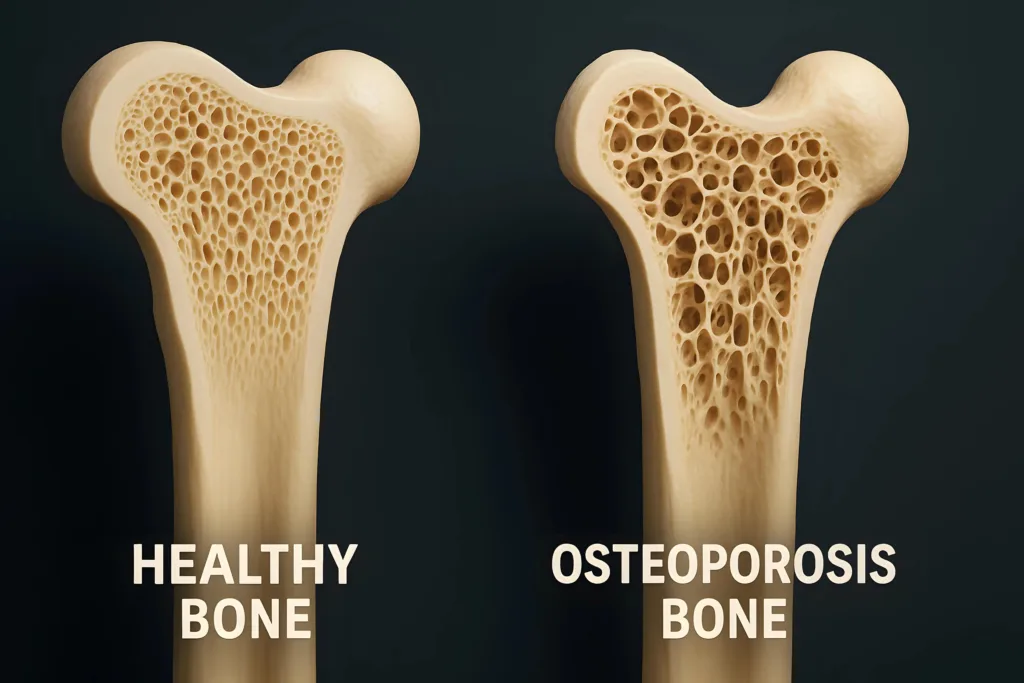
Osteoporosis is a common bone disease that affects millions of people worldwide. It develops when bones lose density and strength, making them weaker and more likely to break. Although osteoporosis can affect both men and women, the risk is particularly high in women after menopause.
Bones provide structure and support to the body, protect vital organs, and help us move. Maintaining bone health is important at every stage of life. However, osteoporosis often develops without noticeable symptoms, which means many people may not realise they have weakened bones until they experience a fracture.
Understanding the causes, risk factors, warning signs, and treatment options for osteoporosis can help people take steps to protect their bone health. Early assessment and appropriate medical care can help reduce the risk of fractures and support long-term mobility and independence.
What Is Osteoporosis?
Osteoporosis is a condition in which bones become less dense and their internal structure weakens. Healthy bones are continuously renewed through a natural process called bone remodelling. During this process, old bone tissue is broken down and new bone tissue is formed.
When bone breakdown occurs faster than new bone formation, bone density and strength can decrease over time. As a result, bones become more fragile and may fracture after a minor fall or, in some cases, an activity that would not normally cause a fracture.
Osteoporosis can affect different bones, but fractures commonly occur in the hip, spine, and wrist. Spinal fractures may sometimes happen without a major injury and can contribute to back pain, loss of height, or changes in posture.
What Are the Causes of Osteoporosis?
Osteoporosis usually develops because of a combination of age-related changes, hormonal factors, genetics, lifestyle habits, and certain medical conditions.
Some people develop low bone density as they grow older, while others may experience bone loss because of hormonal changes or medications. Identifying possible causes can help healthcare professionals assess a person’s risk and recommend appropriate steps.
1. Ageing
Bone density generally increases during childhood and early adulthood, reaching its peak in early adulthood. As people age, the balance between bone breakdown and bone formation may shift towards bone loss. This can gradually increase the risk of osteoporosis.
2. Hormonal Changes and Menopause
Oestrogen plays an important role in maintaining bone strength. After menopause, oestrogen levels decrease, which can accelerate bone loss in women.
Men also experience age-related changes in bone health, and low testosterone levels can contribute to reduced bone density in some cases.
3. Family History and Genetics
A family history of osteoporosis or fractures can increase a person’s risk. Genetic factors influence bone density, bone structure, and how the body maintains bone tissue.
Having a family history does not mean that osteoporosis is inevitable, but it is a useful factor to discuss with a healthcare professional.
4. Poor Nutrition
Calcium and vitamin D are important for maintaining healthy bones. Calcium helps build and maintain bone tissue, while vitamin D supports the body’s absorption of calcium.
A diet that consistently lacks these nutrients may contribute to poor bone health, particularly when combined with other risk factors.
5. Lack of Physical Activity
Regular physical activity helps support bone strength, muscle function, balance, and mobility. A sedentary lifestyle may contribute to weaker bones and can increase the risk of falls.
6. Smoking and Excessive Alcohol Consumption
Smoking and excessive alcohol consumption can negatively affect bone health. Avoiding tobacco and limiting alcohol can form part of a broader approach to reducing osteoporosis risk.
7. Certain Medical Conditions and Medicines
Some medical conditions can affect bone metabolism. Long-term use of certain medicines, including glucocorticoid steroids, may also increase the risk of bone loss.
People taking long-term medication should not stop or change their treatment without medical advice. A healthcare professional can assess the potential effect on bone health and discuss suitable monitoring or preventive measures.
What Are the Symptoms of Osteoporosis?
Osteoporosis is often called a “silent disease” because it may not cause noticeable symptoms during its early stages. Bone loss can occur gradually without pain or obvious changes in daily activities.
Symptoms may become noticeable after a fracture or when bone weakness begins to affect posture and movement.
Possible signs and complications include:
- Fractures after minor falls: A weakened bone may break after a relatively minor injury.
- Persistent back pain: Spinal fractures can cause sudden or ongoing back pain.
- Loss of height: Repeated spinal fractures may lead to a gradual reduction in height.
- Changes in posture: Some people develop a forward-curving upper back due to vertebral fractures.
- Reduced mobility: Fractures, pain, and fear of falling can make everyday activities more difficult.
These symptoms can have other causes as well. Anyone experiencing unexplained back pain, a suspected fracture, or a fracture following a minor injury should seek medical assessment.
Who Is at Risk of Developing Osteoporosis?
Osteoporosis can affect adults of different ages, although the risk generally increases with age.
People who may have a higher risk include:
- Women after menopause.
- Older adults.
- People with a family history of osteoporosis or fragility fractures.
- Individuals with low body weight or a history of poor nutrition.
- People who have low calcium or vitamin D levels.
- Individuals who smoke or consume excessive alcohol.
- People who have limited physical activity.
- Patients with certain hormonal, digestive, or inflammatory medical conditions.
- People taking long-term corticosteroid medication.
Having one or more risk factors does not automatically mean that a person has osteoporosis. A healthcare professional can review personal risk factors and determine whether further assessment is appropriate.
How Is Osteoporosis Diagnosed?
Early diagnosis can help identify weakened bones before a serious fracture occurs. A healthcare professional may assess bone health by reviewing medical history, family history, lifestyle factors, previous fractures, and relevant medicines.
Depending on the individual’s risk, the following assessments may be recommended.
Bone Mineral Density Test
A bone mineral density (BMD) test, commonly performed using dual-energy X-ray absorptiometry (DXA or DEXA), measures bone density. It commonly assesses the hip and spine and helps identify low bone density and osteoporosis.
The results are interpreted alongside age, medical history, and other clinical factors. The clinician can explain what the findings mean and whether treatment or follow-up is needed.
Blood Tests
Blood tests may be recommended to assess factors that affect bone health or investigate possible underlying causes of bone loss. Depending on the situation, these may include tests related to calcium, vitamin D, kidney function, or other relevant conditions.
Blood tests alone do not usually diagnose osteoporosis, but they may help guide the overall assessment.
Fracture Risk Assessment
A healthcare professional may also evaluate the likelihood of future fractures by considering bone density, age, previous fractures, family history, and other risk factors.
Not everyone requires the same tests. The appropriate diagnostic approach depends on the person’s symptoms, risk profile, and clinical assessment.
How Can Osteoporosis Be Prevented?
Although some risk factors cannot be changed, several lifestyle measures can support bone health and help reduce the risk of osteoporosis.
1. Eat a Balanced, Bone-Friendly Diet
Include calcium-rich foods as part of a balanced diet. Suitable options may include milk, yoghurt, cheese, calcium-fortified foods, and certain leafy green vegetables.
Vitamin D supports calcium absorption. Depending on individual needs, vitamin D may come from food, appropriate sunlight exposure, or supplements recommended by a healthcare professional.
People with dietary restrictions or conditions affecting nutrient absorption may need individualised nutritional advice.
2. Exercise Regularly
Weight-bearing activities, such as walking, and resistance exercises can help support bone and muscle health. Balance exercises may also help reduce the risk of falls.
The most suitable activity depends on age, fitness, existing medical conditions, and fracture risk. People with osteoporosis or a history of fractures should seek professional guidance before starting strenuous exercise or activities involving bending, twisting, or heavy lifting.
3. Avoid Smoking and Limit Alcohol
Avoiding tobacco and limiting alcohol consumption can support overall health and help reduce factors associated with bone loss.
4. Prevent Falls at Home
Fall prevention is especially important for older adults and people with weakened bones. Helpful steps include:
- Keeping floors and walkways free from clutter.
- Improving lighting in hallways and staircases.
- Using handrails where needed.
- Wearing suitable footwear with good grip.
- Addressing vision problems and balance difficulties.
- Reviewing medicines with a healthcare professional if dizziness or unsteadiness occurs.
5. Discuss Bone Health With Your Doctor
People with known risk factors, previous fragility fractures, or long-term steroid use should discuss whether a bone health assessment is appropriate.
Early advice can help identify modifiable risks and determine whether monitoring or treatment is needed.
What Are the Treatment Options for Osteoporosis?
Osteoporosis treatment aims to reduce bone loss, improve bone strength where possible, and lower the risk of fractures. The treatment plan depends on bone density, fracture history, age, other medical conditions, and individual risk.
Lifestyle and Nutritional Measures
Adequate calcium and vitamin D intake, appropriate physical activity, avoiding smoking, limiting alcohol, and preventing falls are important parts of bone health management.
These measures support overall treatment but may not be sufficient on their own for people with a high risk of fractures.
Medications
Several prescription medicines are available to help manage osteoporosis. Some slow bone breakdown, while others help stimulate bone formation. The appropriate medicine depends on the patient’s clinical condition and fracture risk.
A doctor can explain the expected benefits, possible side effects, precautions, and duration of treatment. Patients should take medicines as prescribed and attend recommended follow-up appointments.
Monitoring and Follow-Up
Osteoporosis management may involve follow-up consultations, review of treatment, assessment of new symptoms, and repeat bone density testing when appropriate.
Ongoing monitoring helps the treating clinician evaluate progress and adjust the care plan if necessary.
When Should You Consult a Doctor?
Consider seeking medical advice if you have risk factors for osteoporosis, have experienced a fracture after a minor fall, notice unexplained loss of height, or experience persistent back pain.
A consultation can help determine whether the symptoms require further investigation and whether a bone density assessment is appropriate.
Seek urgent medical attention after a suspected fracture, particularly if there is severe pain, inability to stand or bear weight, or a significant injury.
Conclusion
Osteoporosis is a condition that weakens bones and increases the risk of fractures. Although bone loss can occur without obvious symptoms, understanding the risk factors and taking preventive steps can help support long-term bone health.
A balanced diet, appropriate exercise, fall prevention, and avoiding smoking can all contribute to healthier bones. For people at increased risk, medical assessment, bone density testing, and suitable treatment may help reduce the likelihood of fractures.
If you are concerned about osteoporosis or your bone health, consult a qualified healthcare professional to discuss your risk factors and the most appropriate next steps.