
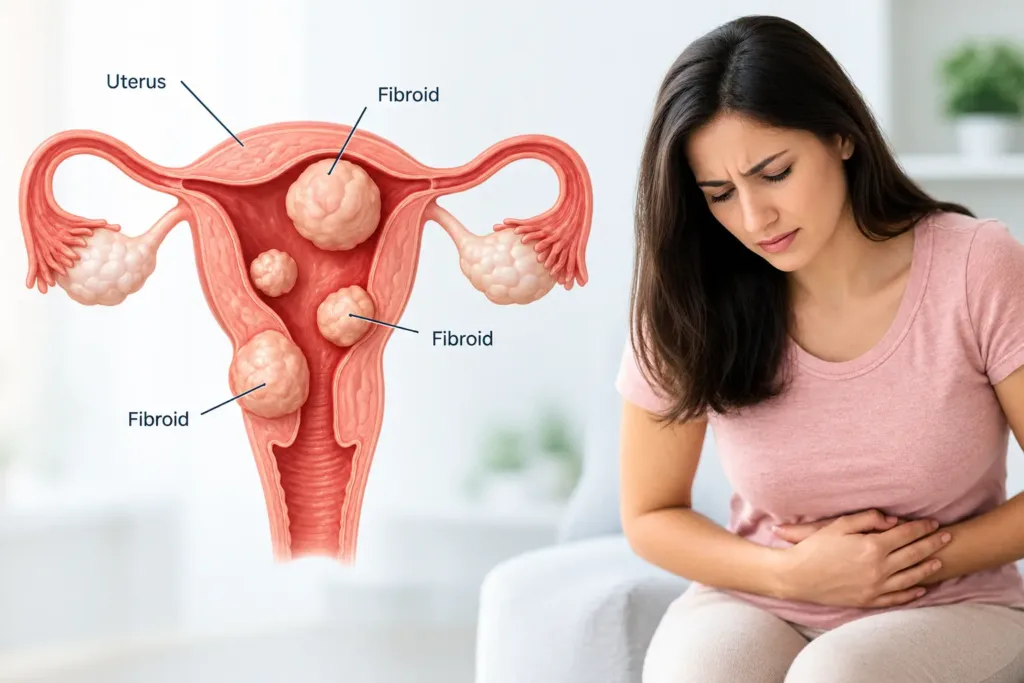
Uterine fibroids are growths that develop in or around the uterus (womb). They are usually noncancerous and may occur as a single growth or as multiple fibroids. Some women experience no symptoms, while others may have heavy menstrual bleeding, pelvic discomfort, frequent urination, or fertility-related concerns.
Understanding the symptoms and available treatment options can help women make informed decisions about their reproductive health. The appropriate approach depends on the location and size of the fibroids, the severity of symptoms, age, overall health, and whether a woman wishes to become pregnant in the future.
What Are Uterine Fibroids?
Uterine fibroids, also called leiomyomas or myomas, are growths that develop from the muscle tissue of the uterus. They are generally benign, meaning they are not cancerous.
Fibroids can vary in size, from very small growths to larger masses that may change the shape or size of the uterus. Some women develop one fibroid, while others have several.
The presence of fibroids does not automatically mean that treatment is required. Women without symptoms may only need monitoring, depending on their clinical assessment.
Types of Uterine Fibroids
Fibroids are commonly described according to where they develop.
1. Intramural Fibroids
These fibroids develop within the muscular wall of the uterus. They may cause no symptoms, but some can contribute to heavy menstrual bleeding, pelvic pressure, or an enlarged uterus.
2. Submucosal Fibroids
Submucosal fibroids grow beneath the inner lining of the uterus and may project into the uterine cavity. Depending on their location and size, they can cause heavy menstrual bleeding and may affect fertility or pregnancy in some women.
3. Subserosal Fibroids
Subserosal fibroids develop on the outer surface of the uterus. Larger growths may press against nearby structures and cause pelvic pressure, discomfort, or frequent urination.
The location of a fibroid is an important factor in determining whether it is likely to cause symptoms and which treatment may be appropriate.
What Are the Common Symptoms of Uterine Fibroids?
Many women with uterine fibroids do not experience noticeable symptoms. When symptoms occur, they can vary according to the fibroids’ size, number, and location.
Common symptoms may include:
- Heavy menstrual bleeding: Periods may become heavier or last longer than usual.
- Pelvic pain or pressure: Some women experience a feeling of fullness, heaviness, or discomfort in the lower abdomen.
- Frequent urination: A fibroid pressing on the bladder may increase the urge to urinate.
- Lower back discomfort: Larger fibroids may contribute to pressure or discomfort in the pelvic and lower back regions.
- Menstrual discomfort: Some women experience increased cramping or painful periods.
- Fertility-related concerns: Certain fibroids, particularly those that affect the uterine cavity, may interfere with conception or increase the risk of some pregnancy complications.
Symptoms do not always correspond directly to the number or size of fibroids. A healthcare professional can assess whether the fibroids are likely to explain a woman’s symptoms.
What Causes Uterine Fibroids?
The exact cause of uterine fibroids is not fully understood. Their development is thought to involve a combination of genetic, hormonal, and other biological factors.
Oestrogen and progesterone, hormones involved in the menstrual cycle, can influence fibroid growth. Genetic changes in uterine muscle cells may also play a role.
Factors associated with a higher likelihood of developing fibroids include family history and certain individual and reproductive factors. Body weight may also be associated with risk, but fibroids can develop in women of different body types.
Fibroids are common, and their presence should not be interpreted as a result of something a woman has done wrong.
How Are Uterine Fibroids Diagnosed?
Diagnosis begins with a discussion of symptoms, menstrual history, medical history, and any fertility-related concerns. A healthcare professional may perform a physical examination and recommend investigations.
Pelvic Ultrasound
Ultrasound is commonly used to identify fibroids and assess their size, number, and location. Depending on the clinical situation, a transabdominal or transvaginal ultrasound may be recommended.
Additional Investigations
Other tests may be advised when more information is needed. These may include MRI imaging to clarify the location or characteristics of fibroids, or blood tests to check for anaemia when heavy menstrual bleeding is present.
Not every patient requires every test. The investigation plan depends on the symptoms and findings.
What Are the Treatment Options for Uterine Fibroids?
Treatment depends on symptom severity, the characteristics of the fibroids, age, general health, and future pregnancy plans. Options range from monitoring to medication and procedures.
1. Monitoring Without Immediate Treatment
Women who have fibroids but no troublesome symptoms may not need immediate treatment. A clinician may recommend follow-up based on the patient’s circumstances and any changes in symptoms.
2. Medication
Medicines may help manage symptoms such as heavy menstrual bleeding or menstrual pain. Some hormonal treatments can reduce bleeding, and certain specialist-prescribed medicines may temporarily reduce fibroid size.
Medication does not suit every patient, and some treatments have limitations or side effects. The choice should be made with a healthcare professional.
3. Myomectomy
Myomectomy is a procedure to remove fibroids while preserving the uterus. It may be considered for women whose symptoms require treatment and who wish to retain the possibility of pregnancy.
The suitability of myomectomy depends on the number, size, and location of the fibroids, as well as the patient’s overall health. Fibroids can develop again after treatment.
4. Hysterectomy
Hysterectomy is surgery to remove the uterus. It is a definitive treatment for uterine fibroids because fibroids cannot recur after the uterus has been removed.
It is generally considered in selected cases when symptoms are significant and other treatments are unsuitable, unsuccessful, or not preferred. It permanently ends the ability to carry a pregnancy.
Removal of the ovaries is a separate decision and is not automatically required with every hysterectomy. The surgical plan should be discussed carefully with the treating specialist.
5. Other Treatment Procedures
Depending on local availability and individual suitability, other options may include uterine artery embolization or certain minimally invasive procedures. These treatments have different benefits, limitations, and implications for future pregnancy.
A gynaecologist can explain which options are available and appropriate for each patient.
Can Uterine Fibroids Affect Fertility?
Many women with uterine fibroids can become pregnant. However, certain fibroids may affect fertility, particularly when they distort the inner cavity of the uterus.
The impact depends on the fibroids’ location, size, and relationship to the uterine cavity. Fibroids may also influence pregnancy management in some cases.
Women who are trying to conceive or planning a pregnancy should discuss their individual circumstances with a gynaecologist before deciding on treatment. Removing fibroids is not necessary for every woman who wishes to become pregnant.
When Should You Consult a Doctor?
Consider seeking medical advice if you experience unusually heavy or prolonged periods, persistent pelvic discomfort, increasing abdominal pressure, frequent urination, or difficulty conceiving.
Heavy bleeding can lead to iron deficiency and anaemia. Seek urgent medical attention if bleeding is severe or accompanied by fainting, marked dizziness, shortness of breath, or significant weakness.
Do not start hormonal medicines or iron supplements without appropriate advice. A healthcare professional can assess the cause of symptoms and recommend suitable treatment.
Taking Care of Your Reproductive Health
Uterine fibroids are common, and their effects differ from one woman to another. Some require no treatment, while others may benefit from medication or a procedure. The most suitable plan considers symptoms, the findings of medical investigations, and the woman’s future pregnancy preferences.
If you are experiencing symptoms that may be related to uterine fibroids, consult a qualified gynaecologist for an individual assessment and discussion of treatment options.