
Supporting Better Healthcare Through Accurate Diagnostic Testing
Advanced diagnostic services play an important role in modern healthcare. They help doctors investigate symptoms, assess specific medical concerns, and make informed decisions about further evaluation and treatment. At Medigram Super Speciality Hospital, Saharanpur, diagnostic services include CT scans, ultrasound, digital X-rays, and pathology testing to support the assessment of a range of medical conditions.
Diagnostic investigations provide valuable information about the body’s internal structures, organs, and selected health indicators. When combined with a patient’s symptoms, medical history, physical examination, and other clinical findings, test results can help healthcare professionals determine appropriate next steps.
At Medigram Hospital, diagnostic investigations are part of the wider patient care process, supporting consultations and treatment planning across relevant medical specialties.
What Are Advanced Diagnostic Services?
Advanced diagnostics refers to medical investigations that help healthcare professionals gather information about a patient’s health. Depending on the clinical concern, a doctor may recommend imaging investigations, laboratory tests, or a combination of both.
Imaging tests can help doctors examine internal structures, while pathology testing analyses samples such as blood or urine. The appropriate investigation depends on the patient’s symptoms, medical history, and the clinical question that needs to be answered.
Not every patient requires the same tests. A qualified healthcare professional will recommend investigations based on individual needs and interpret the findings in the context of the patient’s overall health.
Diagnostic Services Available at Medigram Hospital
1. CT Scan
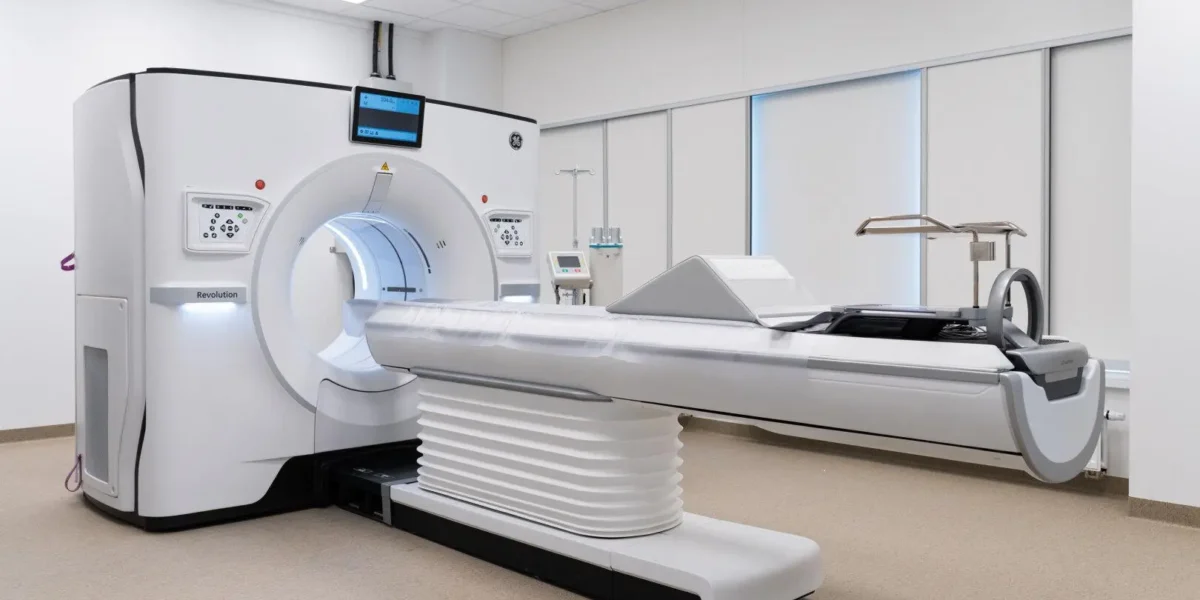
A CT scan, also known as computed tomography, uses X-rays and computer processing to create detailed images of structures inside the body. Depending on the area being examined, it may help doctors investigate certain injuries, internal abnormalities, and other medical concerns.
A CT scan may be recommended when a doctor needs more detailed imaging to evaluate a particular condition or support further clinical assessment. The body area examined and the need for contrast material depend on the reason for the investigation.
Because CT scans involve ionising radiation, the decision to perform one should be based on medical necessity. Patients should inform their healthcare team about relevant medical conditions, allergies, and other information requested before the procedure.
2. Ultrasound
Ultrasound imaging uses high-frequency sound waves to produce images of internal organs and other structures. It is commonly used to examine selected areas of the abdomen and pelvis, depending on the doctor’s assessment.
An ultrasound may help healthcare professionals investigate certain symptoms, assess specific organs, and gather information that supports diagnosis and treatment planning. The type of ultrasound required depends on the clinical concern.
Preparation instructions vary according to the examination. Some scans may require fasting or a full bladder, while others may not. Patients should follow the specific instructions provided when their investigation is scheduled.
3. Digital X-Ray
Digital X-ray imaging uses X-rays to produce images of selected areas of the body. It is frequently used to examine bones and certain structures within the chest and other body regions.
A doctor may recommend an X-ray when evaluating particular injuries, suspected fractures, joint concerns, or selected chest conditions. The exact purpose depends on the patient’s symptoms and clinical examination.
Digital imaging can provide information that helps doctors assess the area being examined and determine whether further investigations or treatment are needed. The results must be interpreted alongside the patient’s clinical findings.
4. Pathology Testing
Pathology testing involves examining samples such as blood and urine to obtain information about different aspects of health. Depending on the investigation requested, laboratory results may help doctors evaluate blood counts, blood glucose, organ function, or other selected health indicators.
Pathology investigations can support routine health assessments, the evaluation of symptoms, and the monitoring of certain medical conditions. The specific test is chosen according to the patient’s clinical needs.
Correct sample collection, appropriate handling, and professional interpretation are important parts of the testing process. An abnormal result does not always confirm a particular disease, and a normal result does not necessarily rule out every condition. Your doctor can explain the findings and advise whether additional evaluation is needed.
Why Are Diagnostic Investigations Important?
Diagnostic testing helps doctors build a clearer understanding of a patient’s health. Rather than relying on symptoms alone, healthcare professionals can use relevant investigation results alongside medical history and examination findings to guide clinical decisions.
Diagnostic services may help to:
- Investigate symptoms and specific medical concerns.
- Examine selected internal organs and body structures.
- Support the assessment of injuries and certain medical conditions.
- Provide information that assists treatment planning.
- Monitor selected conditions when repeat investigations are clinically appropriate.
- Support routine health assessments when recommended by a doctor.
The type and timing of an investigation should always be guided by clinical need. More testing is not necessarily better; the goal is to select appropriate investigations that provide useful information for the patient’s care.
What to Expect Before Your Diagnostic Test
Preparation depends on the investigation being performed. Before your appointment, confirm the instructions provided by the hospital or your treating doctor.
For a smoother experience, consider the following steps:
- Carry your doctor’s prescription or investigation request, if applicable.
- Bring relevant previous reports and imaging records.
- Inform the healthcare team about relevant medical conditions, allergies, and medications.
- Follow any instructions regarding fasting, hydration, or sample collection.
- Ask whether you need to arrive early or make any special preparations.
- Confirm how and when you should follow up regarding your results.
Do not discontinue prescribed medication unless your treating doctor advises you to do so.
If you are pregnant or think you may be pregnant, inform the healthcare professional before an imaging investigation, particularly before an examination involving radiation. The team can assess the circumstances and advise on appropriate precautions or alternatives.
Understanding Your Diagnostic Reports
A diagnostic report is one part of the overall medical assessment. Its meaning depends on the investigation performed, the reason it was requested, and the patient’s symptoms and medical history.
After receiving your results, discuss them with the doctor who recommended the investigation or another appropriate healthcare professional. They can explain the findings, clarify whether further assessment is necessary, and advise on the next steps.
Avoid interpreting a report in isolation or starting, stopping, or changing treatment without appropriate medical guidance.
Advanced Diagnostics at Medigram Super Speciality Hospital, Saharanpur
Medigram Super Speciality Hospital provides diagnostic and healthcare services at its facility on Delhi Road in Saharanpur, Uttar Pradesh. Its diagnostic services include CT scan, ultrasound, digital X-ray, and pathology testing, supporting doctors in the evaluation of medical conditions and the planning of appropriate care.
Whether an investigation is recommended during a consultation or as part of ongoing medical care, patients should follow the instructions given by their healthcare professional and confirm the availability and preparation requirements of the specific test.
Contact Medigram Hospital
If your doctor has recommended a diagnostic investigation, contact Medigram Super Speciality Hospital to confirm the available service and the next steps for your visit.
Address: 7th Km Milestone, Chunhati, Delhi Road, opposite Pinewood School, Saharanpur, Uttar Pradesh 247001.
Phone: +91 8477001904
Email: info@medigramhospital.com
Medigram Super Speciality Hospital — supporting informed medical decisions through diagnostic services and patient-focused care.
Medical disclaimer: This page is intended for general information and does not replace professional medical advice, diagnosis, or treatment. The need for a diagnostic investigation should be determined by a qualified healthcare professional.