
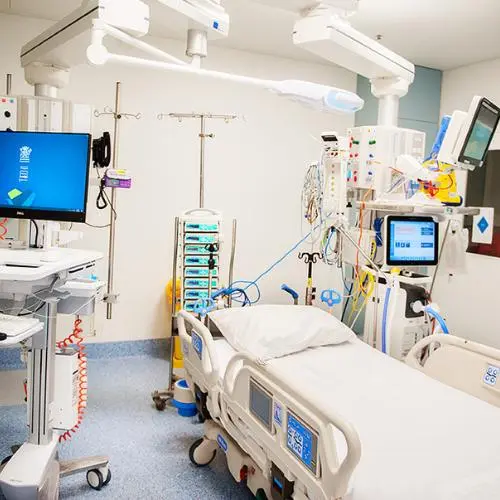
Specialised Medical Care for Patients Who Need Close Monitoring
Critical care plays an important role in treating patients with serious illnesses, complex medical conditions, or complications that require close observation and specialised medical attention. At Medigram Super Speciality Hospital, Saharanpur, critical care facilities include the Intensive Care Unit (ICU), Intensive Coronary Care Unit (ICCU), and High Dependency Unit (HDU).
These facilities support the clinical team in monitoring patients, assessing changes in their condition, and coordinating appropriate treatment according to their medical needs. Critical care may be required when a patient’s condition is unstable, when continuous observation is necessary, or when a higher level of medical support is recommended.
The type of care provided depends on the patient’s diagnosis, severity of illness, treatment requirements, and response to medical management. The treating team determines the most appropriate care setting for each patient.
What Is Critical Care?
Critical care is a specialised area of healthcare for patients who need more intensive medical observation and treatment than can generally be provided in a routine hospital ward.
Patients may require critical care because of a serious illness, major injury, complications following surgery, or a medical condition that needs close monitoring. The medical team evaluates each patient’s condition and determines the appropriate level of support.
Critical care involves coordination between doctors, nursing professionals, and other relevant healthcare staff. Depending on the patient’s needs, care may include repeated clinical assessments, monitoring of vital signs, prescribed medications, diagnostic investigations, and specialised medical support.
The primary objective is to monitor the patient’s condition carefully and respond appropriately to changes identified during treatment.
Critical Care Facilities at Medigram Hospital
1. Intensive Care Unit (ICU)
The Intensive Care Unit is designed for patients who require close observation and specialised medical management because of serious or potentially life-threatening conditions.
Patients may be considered for ICU care when their condition requires frequent assessment, intensive monitoring, or medical support that cannot be provided adequately in a general ward.
Depending on the clinical situation, ICU care may involve:
- Close monitoring of vital signs and overall clinical status.
- Regular assessment by the treating medical team.
- Management of serious medical conditions under specialist supervision.
- Coordination of investigations and treatment according to clinical requirements.
- Support for patients whose condition requires a higher level of observation.
The need for ICU admission is determined by the treating team based on the patient’s medical condition and the level of care required.
2. Intensive Coronary Care Unit (ICCU)
The Intensive Coronary Care Unit provides specialised monitoring and medical management for patients with serious heart-related conditions that require close observation.
Cardiac conditions can sometimes change rapidly and may require continuous assessment by an appropriate medical team. ICCU care supports the evaluation and management of patients whose cardiovascular condition requires a specialised care environment.
Depending on the patient’s needs, care may involve monitoring cardiac status, assessing changes in symptoms, reviewing relevant investigation results, and coordinating treatment under the guidance of the treating team.
The decision to admit a patient to the ICCU depends on the nature and severity of the cardiac condition and the clinical support required.
3. High Dependency Unit (HDU)
The High Dependency Unit provides a level of care for patients who need closer observation and more intensive nursing or medical attention than is generally available in a routine hospital ward.
An HDU may be appropriate for selected patients who require frequent monitoring, including some patients recovering from serious illness or surgery. The need for this level of care depends on the patient’s condition and the treating team’s assessment.
The clinical team monitors the patient’s progress and determines whether continued HDU care, transfer to another hospital unit, or a different treatment approach is appropriate.
The HDU is an important part of coordinating care for patients whose medical needs fall between routine ward care and more intensive critical care.
Conditions That May Require Critical Care
Critical care may be recommended for patients experiencing serious medical problems or complications that require close monitoring. Depending on the individual case, these may include:
- Severe medical illness requiring intensive observation.
- Serious cardiac conditions requiring specialised monitoring.
- Major injuries or complications following an accident.
- Complications following surgery that require closer supervision.
- Significant changes in a patient’s vital signs or clinical condition.
- Other conditions in which the treating team determines that a higher level of care is necessary.
This list is not exhaustive. Not every patient with these conditions will require ICU, ICCU, or HDU admission. The appropriate level of care depends on clinical assessment and the patient’s individual requirements.
Monitoring and Coordinated Medical Care
Close monitoring is an essential part of critical care. It helps the healthcare team observe the patient’s condition, review changes, and assess how the patient responds to treatment.
Depending on the patient’s needs, the critical care team may monitor vital signs, review diagnostic results, administer prescribed treatments, and coordinate consultations with relevant specialists.
Communication between the treating doctors, nursing professionals, and other members of the healthcare team helps support coordinated patient management. The frequency and type of monitoring depend on the patient’s condition and the treatment plan.
Critical care is individualised. Some patients may require intensive support for a limited period, while others may need continued observation as their condition evolves.
What Families Should Know About Critical Care
Having a family member admitted to a critical care unit can be a stressful experience. Understanding the general purpose of the unit and maintaining communication with the treating team can help families navigate this period.
Family members and attendants should:
- Share relevant medical history, allergies, and medication details with the healthcare team.
- Provide previous medical reports when available and relevant.
- Ask the treating doctor to explain the patient’s condition and treatment plan.
- Follow the hospital’s visiting and infection-prevention instructions.
- Speak with the authorised medical team for updates about the patient’s progress.
- Ask questions whenever information about the patient’s care is unclear.
The patient’s condition and treatment requirements may change over time. The treating team is best placed to explain the patient’s current status, anticipated care needs, and possible next steps.
Critical Care at Medigram Super Speciality Hospital, Saharanpur
Medigram Super Speciality Hospital provides ICU, ICCU, and HDU care for patients who require close medical monitoring and specialised treatment. The critical care facilities support the clinical team in assessing patients and coordinating appropriate care according to their condition.
Located on Delhi Road in Saharanpur, the hospital provides emergency services and a range of medical specialties that may contribute to a patient’s assessment and management when clinically required.
The decision to recommend critical care is made by the treating medical professionals after considering the patient’s condition, monitoring requirements, and overall treatment needs.
Contact Medigram Hospital
For information about hospital services, patient admission, or visiting arrangements, contact Medigram Super Speciality Hospital.
Address: 7th Km Milestone, Chunhati, Delhi Road, opposite Pinewood School, Saharanpur, Uttar Pradesh 247001.
Phone: +91 8477001904
Email: info@medigramhospital.com
Medigram Super Speciality Hospital — specialised monitoring and coordinated medical care when patients need additional support.
Medical disclaimer: This page provides general information about critical care services and is not a substitute for professional medical advice, diagnosis, or treatment. Admission to an ICU, ICCU, or HDU is determined by the treating medical team according to the patient’s clinical needs.